Saturday, August 4, 2007

Canon S5 IS

I told you all that I'd gotten a couple new cameras and it's about time I introduced you to one of them. I didn't ever think I'd buy myself a super zoom but I'm now the proud owner of a Cannon S5 IS camera.
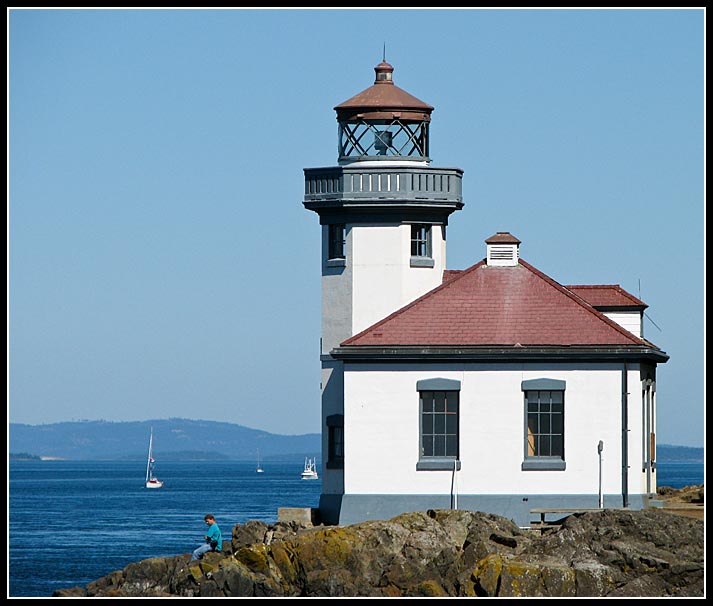
I was getting tired of lugging the DSLR and lenses around all the time but I was reluctant to leave them behind on my hiking trips never knowing what I'd see or when the mood to do some photography would strike. After getting a couple longish lenses for my DSLR I was finding I liked using the longer focal lengths. The idea of a decent super zoom camera was really starting to appeal to me. It would give me a good range of focal lengths (leaving out the wide end) and was also light and compact enough not to be a burden when back packing. Not having to lug around as much camera gear would also let me carry around a smaller, lighter back pack as well.

I did some research but it really wasn't tough to settle on the Canon S5 once I decided to buy a super zoom. The fact that it was one of only a few to offer a flash hot shoe made the decision even easier. While there may be other brands that do better under some circumstances Canon seems to build the best overall P&S cameras from what I've seen.

I stopped in a Best Buy one day and was able to play with both the S5 and the S3 (its predecessor). Both are setup very similarly but the larger screen of the S5 was nice and it also seemed to have a much wider viewing angle (the S3 seemed to black out very easily if not looking at it straight on). As with all small sensor cameras the S5 IS won't do real great at higher ISO's in low light but I'm banking that the IS (Image Stabilization) will make up for the difference by allowing me to shoot at lower ISO's in low light.
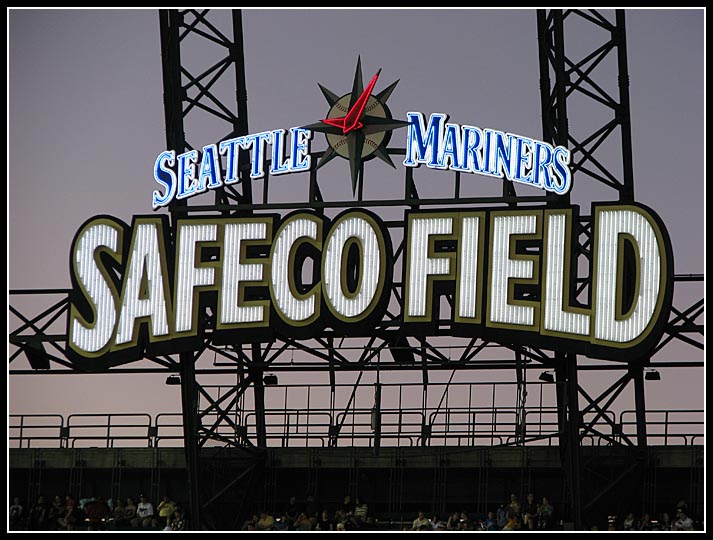
So far I must say I'm very happy with the camera. I've taken it out on a few outings from biking, to walking around the city, to hiking in the mountains. The small size and light weight is a real blessing and I love the long zoom capabilities of the lens (423mm Equivalent). I've gotten shots with the camera I wouldn't have been able to get with my DSLR just because I don't have that long of lenses. The 35mm equivalent on the wide end is pretty much standard and it's a focal length that I enjoy using. So far I've found the controls to be set up pretty well and using the camera in either AV or M (Aperture Priority and Manual) is very easy; the live histogram makes getting the exposure correct a snap. I also love the flip out screen which is something I wanted the camera to do. It's great for macro and low angle shooting when I don't want to crawl on the ground for the shot. You can flip the screen around 180 degrees too which makes taking a self portraits a snap!
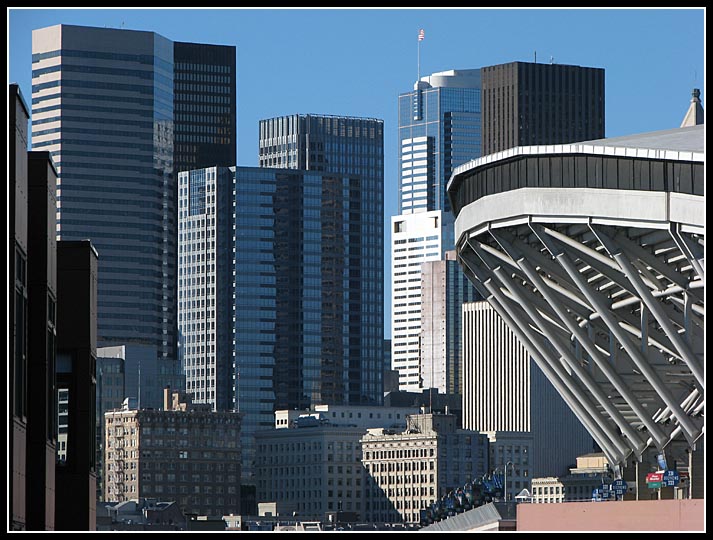
The picture quality is decent and pretty much what I expected. There's no way the image quality compares to that of a DSLR but I didn't expect it to either so I'm not disappointed. Most of my images will only be used on the web anyway and I'm sure I'd have no problems making 8X10's from most of the shots.

I haven't done any real testing but the IS seems to be working as advertised and I've gotten some sharp shots at very long focal lengths at pretty low shutter speeds.
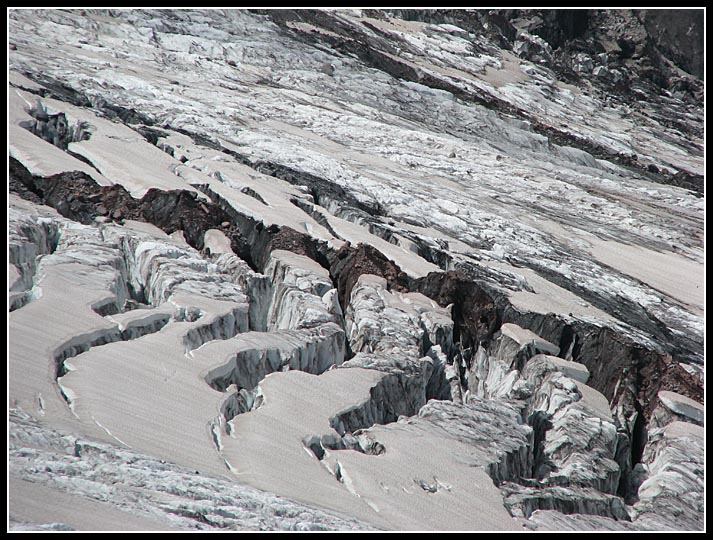
The focus speeds is fast enough for me and I haven't had any troubles with the focus accuracy. I'm using the camera on center weighted metering and it's done a fine job so far. Like I said earlier the live histogram makes it easy to see when it's made a mistake before you take the shot.
There are of course a few complaints I have with the camera, none of them real major though. The EVF (Electronic View Finder) sucks, not that anyone else is doing any better in this regard from what I here. It's low resolution, small, and I find it difficult to use. So far I haven't had much issue using the screen even in the sun but it would be nice using the EVF to save battery life. As it is though I'll sacrifice battery life for easier to use screen over the EVF.
I also wish the lens cap fit tighter. I find it's constantly popping off and if I forget to remove it before powering the camera on the lens extends and just pops it off and onto the ground, which could be a very bad thing in some situations. I wish they would have just programmed the camera so that it would detect excessive current as the lens tried to extend on startup if the cap was on; causing it to stop extending the lens to keep from damaging anything and displaying up a warning on the LCD to remove the lens cap.

If course, I really wish the camera had a RAW capture mode too though I've been happy with the JPG output so far.

I'm sure as I use the camera more I'll find more limitations and things I don't like but right now it's looking like it's going to be a real winner for me. Hiking 10 miles through the mountains yesterday was definitely easier and more fun since I could carry a smaller pack and less weight.

Thursday, August 2, 2007

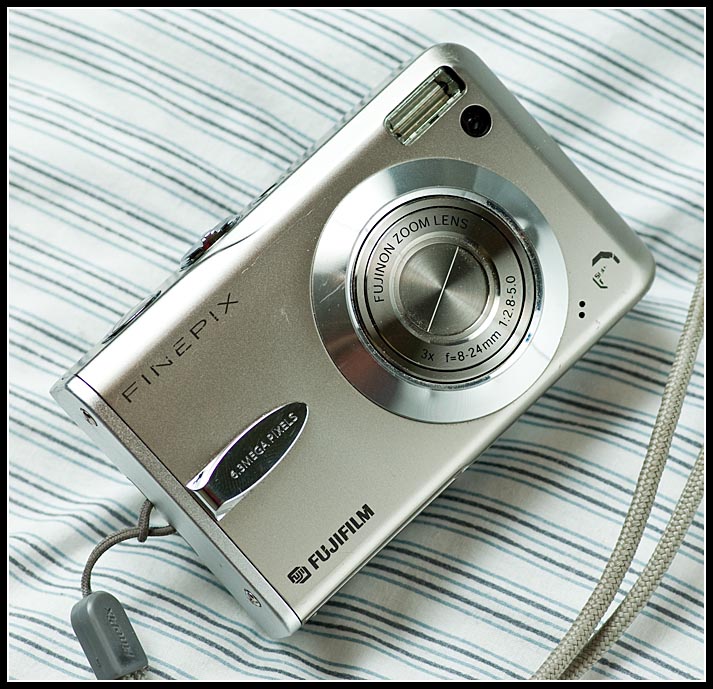
Fuji F30

To compliment my DSLR system I bought a Fuji F30 just after it came out. It got rave reviews for excellent lens sharpness as well as unsurpassed performance at high ISO's in the digital P&S market. A feat which still hasn't been matched by any other manufacturer. I got along great with the camera and I took plenty of good shots with it. It was small, light, and I hardly even noticed it in my pocket. As advertised the lens was very sharp and it performed excellent at higher ISO's (nothing compared to a DSLR though). Battery life is fantastic too at around 500 shots or so. For a a while I used the camera a lot and in many situations where I normally would have used my DSLR. The longer I owned it though the less I used it, favoring my DSLR for all but true P&S situations.

One of my major gripes with the camera was the lack of a historgram; either live or in play back mode. It's just not possible to properly judge the exposure looking at the screen on back of the camera, particularly in bright sunlight. This left me with plenty of pictures that turned out to have badly blown highlights. There are no full manual controls either, although it does offer AV and TV modes; though I find them kind of clunky to use. The control wheel on top of the camera was too easy to turn and it seemed to never be on the mode I left it on when I put it in my pocket. The purple fringing everyone talks about wasn't horrible in normal use but it was a little annoying at times; made worse by the blown highlights from the lack of a histogram. What it really boiled down to for me was that the F30 was set up to be used as a P&S camera and I wanted something that offered more control.

A few weeks ago I started thinking about replacing it and I started researching my options. I wanted something that gave real manual controls and also had a hot shoe so I could use it with external flash. I knew I'd be giving up the great high ISO performance but felt that I could make up the difference by getting a camera with image stabilization. I realized that I very rarely shot the camera at over 400 ISO and if image stabilization gave me an extra two stops I could still shoot at ISO 100 in those situations.

I also wanted something that could actually stand in for my DSLR when I was backpacking or traveling light when I didn't want the extra weight and bulk. In the end it took two more cameras to give me what I wanted. So far so good with both of them but only time will tell if they were really an answer to a problem or just a temporary patch. I realize that the F30 is capable of remarkable results and I've seen people over come its limitations with some incredible pictures. Hopefully though these new cameras will better serve my needs for a longer period of time and will help me create some the shots I feel I've been missing.

Still though, if you're just looking for a small P&S that can easily fit in your pocket and give tremendous results then the F30 is definitely something to look at; though it's now been replaced by the F31 fd which is supposed to be pretty darn good as well.

More to come on the new arrivals soon!

Wednesday, August 1, 2007

New Stuff around the corner

I just got back from a 4 day bicycle trip in the San Juan Islands and I'll be spending the day and evening in Seattle today so I don't have time to do much writing. I do have some new toys to write about though so expect more fun stuff in the next day or two.

Friday, July 27, 2007

Pentax K10D

I suppose I should start things off with a run down of my gear; I'll start with my DSLR since it's my main camera.

I finally jumped into digital a few years back when I purchased a Pentax *ist DS (yes, I know it's a stupid name) because I had plenty of old Pentax lenses, they were the smallest DSLR's out there, and they had the best viewfinders. I wasn't disappointed and I got along great with the camera. Earlier this year I decided to upgrade when Pentax came out with the K10D. The biggest reasons for the upgrade were built in image stabilization, dual control wheels, larger buffer, semi-pro build quality, weather sealing, and more customization. It also had 10mp over the 6mp of the *ist DS but this was way down on my list of reasons for an upgrade.

Overall I'm very happy with the camera. It's a little bigger then I'd like but it still fits my hand well and I don't have a problem lugging it around. As with pretty much every DSLR out there image quality is fantastic and I've found nothing there to complain about. Because of the increased number of pixels they crammed onto the sensor noise does seem a little worse at higher ISO's then the *ist DS but it's still acceptable for me; though I do try to stay away from ISO 1600 when possible.

Having dual control wheels is great and I love being able to customize their functions how ever I want in the different modes. For instance, in manual mode I have it set up so the rear wheel controls aperture and the front shutter speed. In AV mode the rear still controls aperture but now I have the front set up for exposure compensation. If I wanted I could set up the wheels to do any number of things. There are plenty of other nifty modes like TV, SV (sensitivity priority), Auto, etc, but to tell you the truth I don't think I've ever used them; I do all my shooting in either manual or AV (Aperture Priority).

I done very little testing of the image stabilization system but I've gotten some very good results at low shutter speeds so it seems to be working as advertised; no complaints there.

One thing I wasn't too crazy about with the K10D was the move from AA batteries to a dedicated rechargeable battery (D-L150). I liked the idea of using AA's with the *ist DS (actually I used CRV-3's) since you could always pick up a set no matter where you were if you found yourself with dead batteries. As it turns out though I get along great with the dedicated battery and like it better then AA's. The solution for me was to pick up a spare battery from EBAY; it's much cheaper then spending $40-60 on one from Pentax. As it turns out the K10D shares a battery with the Sony/Minolta line of DSLR's (they call it an NP400)which have been out for quite a long time and it's a battery that's readily available on-line. I bought one for about $12 off EBAY (that included shipping and a charger) and it works great. Each battery gives close to 1000 exposures, so with 2 of them I'm pretty much set for everything. If I know I'll be traveling for a long time (like on this trip) then I'll bring the charger too knowing that somewhere along the line I can find a power source to plug into to recharge the batteries. So far I've had no issue at all with the batteries and find them easier to carry and keep track of them multiple AA's.

Of course there are some negatives to the camera and I'd be remiss if I didn't talk about some of them. The biggest one is the lack of high quality lenses and accessories for Pentax in general. It's never been a highly popular brand so there aren't many after market companies that build good gear in the Pentax K mount, instead focusing more on Canon and Nikon (even my spell check doesn't recognize 'Pentax' but has no problem with 'Nikon'). There are tons of slow, consumer zoom lenses out there. But if you want something along the lines of a professional zoom lens (like a 28-80/2.8) then it's going to be hard to find either new or used, and when you do find one it's going to be really expensive because they're so hard to come by. Even Pentax doesn't build many of these lenses so you can't even buy them new from the manufacturer. They're supposed to be coming out with some professional quality zoom lenses later this year but still, Nikon and Canon have had them available for many years. Same goes for dedicated flash units and the like.

Couple that with the fact that for the last year or so most Pentax lenses and accessories have been unavailable due to low supplies can make owning a Pentax camera and wanting to outfit it very frustrating. The second a large supplier would get in a shipment of Pentax lenses word would spread like wild fire through the internet forums and they'd be sold out again within a day or so as people bought them up. This seems to have been resolved to an extent but after just checking I see there are still some really good lenses being listed as “out of stock” at B&H. One thing Pentax does have going for them though is unique lenses. They seem to have devoted themselves to high quality prime lenses more then any other manufacturer with quite a few different “pancake” lenses, so named for their amazingly short physical length, making them very small and light.

Another problem I have with the K10D is the low flash sync speed of 1/180. That wasn't a big deal when I bought it but not that I'm getting more into off camera flash with small strobes thanks to strobist.com I'm wishing many times that it had at least 1/250 and I'm totally jealous of even the low end Nikon D70 with an electronic shutter that can sync at well over 1/500. Other then those two things I don't think I have any real complaints about the K10D, though I'm sure I could find some more small things if I really thought about it. It's a great camera overall and gives a lot of bang for the buck.

I've gotten rid of most of my old manual focus K and M lenses for convenience sake and now primarily shoot with the 16-45/4 DA and 100/2.8 DFA Macro lenses from Pentax. I'd shot nothing but prime lenses (fixed focal length) for years so it was kind a tough swallow to break down and buy a zoom; but I must say I've been very impressed with the 16-45. The quality seems to be excellent even wide open and it's gotten me shots that I never would have gotten had I been carrying around primes. It's also handy to have one zoom lens take the place of 2 or 3 prime lenses when it comes to lugging it all around. There are times I wish it had a longer maximum focal length but for a general carry around lens it's perfect.

The 100/2.8 macro was a tough decision because it was more then I really wanted to spend but it really fit the bill for me. I needed a lens in the 100mm range with a wide aperture for some of the theatre shooting I was doing for a local community theatre and I also wanted something that would go down to 1:1 for my macro work. At the time I had both an old 100/2.8 M and 100/4 M macro (only 1:2 magnification) lenses that worked OK but it was a pain to carry them both so I decided to consolidate by selling them.

Since getting the 100/2.8 DFA it's become one of my most used lenses and I really love it. Some people complain that the build is too light but that was my biggest reason for getting it. It still feels plenty substantial to me and the small size/light weight makes it perfect for carrying around in the back pack or over the shoulder. It's smaller/lighter then any other macro lens I looked at. And the picture quality? I can't imagine anything being any better. Along with being an excellent macro lens it's done great as a portrait lens and I'm also finding it a focal length I get along well with when it comes to landscapes. Although it was a tough decision I'm very happy I went ahead and bought it.

I also have an old 50/1.7 A lens and a 70-210/4 A lens that get occasional use now and then. Both are good quality and fill a niche for me but are a bit more of a hassle to use then their newer, electrified companions.

That pretty much covers my most used equipment. I'll write more about my flashes, bags, tripods, and little P&S cameras later.

Saturday, July 21, 2007

Get this show on the road

If you want to know more about me then I'll recommend you over to my travel blog where you can be entertained for hours on end by my little adventure.

If you're lazy and not initiated enough to follow a simple link then I'll give you a brief run down by introducing myself as Alan Gage and letting you know that I've sold my house and nearly all my worldly possessions to live out of my car and travel around the country. Cool, huh?

I'm currently about 2 months into the trip and things are going very well. Unfortunately I'm not independently wealthy so nearly everything I do has to be on the cheap and I'm picking up work a week or two at a time as I travel to try and keep some money in the bank.

But that's not what this blog is really going to be about. Photography is my main hobby and I'm trying to get plenty of it in while I'm seeing the country. I show plenty of it on my main travel blog but I don't really want to bore everyone that reads it with all the little technical details that I find so interesting; because believe or not that's just plain boring to 99% of the population!

I'm pretty much a what you see is what you get type of guy and that should be reflected in my writings on photography. I'll talk about my equipment, how it works, and what I think of it; but you're not likely to see me put up a bunch of 100% crops and nit pick every little thing. I'm much more concerned with how the equipment actually works in real life and not in controlled test situations. Hopefully that viewpoint will be a bit refreshing.

Phew, that's about enough work for today. There's no need to rush into anything. I better go rest a while and further updates will follow.

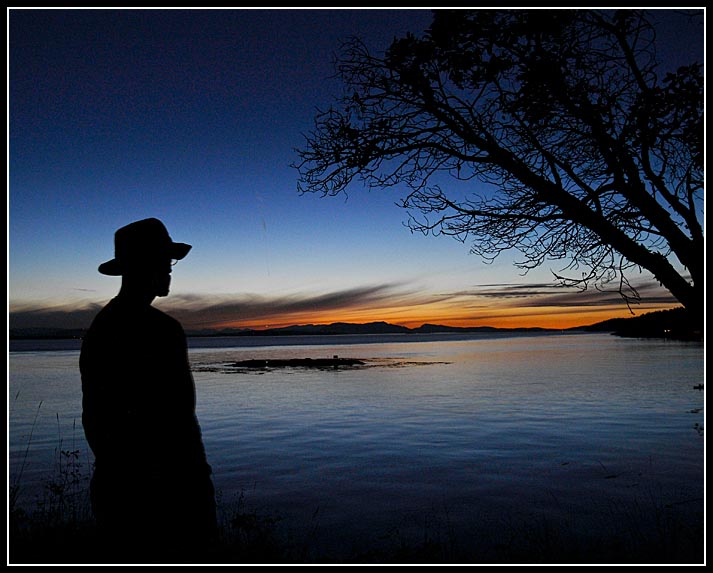
Details of above self portrait: umbrella to camera left, Pentax K10D and DA40/2.8 lens on tripod in front of me set to a different ISO then my flash meter because it was really late and I also forgot to turn on the bare flash to the camera right to act as fill. Oddly enough I liked this picture better then any of the others I took where things were actually set correctly! Ain't that the way it always goes?